The ADDitude Store
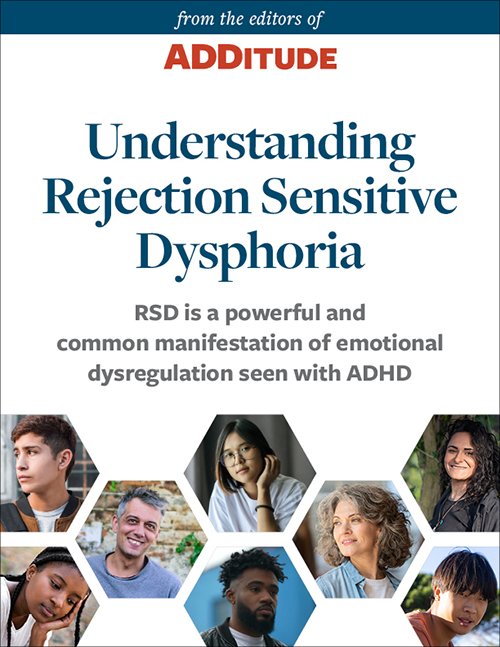


Understanding Rejection Sensitive Dysphoria
Original price was: $8.95.$6.95Current price is: $6.95.
-
Product Description
Rejection sensitive dysphoria (RSD) is not a formal diagnosis, but it is one of the most common and disruptive manifestations of emotional dysregulation associated with ADHD. RSD is often described as an extreme emotional sensitivity and pain triggered by the perception of rejection or criticism by others, or by the failure to meet your own high standards or others’ expectations.
People with RSD feel intense emotions of self-consciousness, unworthiness, and hurt. These intense feelings often lead to unusually severe and outsized responses. Many people with RSD develop social anxiety and avoid activities and events where they fear they will embarrass themselves or be humiliated and scrutinized harshly in public.
Understanding Rejection Sensitive Dysphoria: RSD Is a Powerful and Common Manifestation of Emotional Dysregulation Seen with ADHD explains what we know about RSD, which interventions reduce rejection sensitivity, and how to silence your inner critic and stop self-sabotaging behaviors. This eBook covers:
- Signature features of RSD in children and adults with ADHD
- Similarities and differences between RSD and mood disorders presentations
- Why RSD isn’t a recognized symptom of ADHD?
- Signs of social anxiety — and interventions that help
- What living with RSD really feels like
- Ways to stop unchecked emotions from damaging your relationships
- Strategies for reframing negative self-talk and halting self-sabotaging behaviors
- How to avoid toxic people and form healthy friendships
- Why rejection sensitivity is worse for girls and women with ADHD
- Healthy ways to calm an emotionally dysregulated child
- And much more!
Additional resources, scientific evidence, and advice from ADHD experts, professionals, and ADDitude editors round out this eBook dedicated to understanding and addressing rejection sensitive dysphoria in children and adults with ADHD.
PLEASE NOTE: This eBook is a downloadable PDF; it does not ship.
-
Full Product Description
Rejection sensitive dysphoria (RSD) is not a formal diagnosis, but it is one of the most common and disruptive manifestations of emotional dysregulation associated with ADHD. It can be described as an extreme emotional sensitivity and pain triggered by the perception of rejection or criticism by others, or by the failure to meet your own high standards or others’ expectations.
For people with RSD, the experiences of rejection, criticism, and failure are unusually severe. Small, relatively insignificant setbacks can provoke outsized responses, leading people to feel intense emotions of self-consciousness, unworthiness, and hurt.
But you can reduce the effect that rejection has on your ADHD brain with the right strategies. Understanding Rejection Sensitive Dysphoria shows you how.
Inside this 120-page eBook, caregivers will learn how to teach and model emotional regulation skills. Children and adults with RSD will find actionable tips for listening to their bodies, identifying and managing RSD triggers, recognizing unhealthy relationships, and reducing their emotional vulnerability to ultimately end RSD’s dominance over their emotional health.
6-PART GUIDE TO MANAGING REJECTION SENSITIVE DYSPHORIA IN CHILDREN AND ADULTS WITH ADHD
Understanding Rejection Sensitive Dysphoria: RSD Is a Powerful and Common Manifestation of Emotional Dysregulation Seen with ADHD contains expert advice and resources spanning the following topics:
CHAPTER 1: THE IMPACT OF REJECTION SENSITIVE DYSPHORIA AND EMOTIONAL DYSREGULATION ON ADHD BRAINS
- RSD is one of the most common and disruptive manifestations of emotional dysregulation associated with ADHD, however, it is not included in the diagnostic criteria for ADHD because it is almost always present and cannot be measured.
- RSD is often misdiagnosed as a mood disorder.
- RSD can affect normal development and alter brain chemistry by increasing the release of adrenaline and cortisol.
CHAPTER 2: WHAT LIVING WITH RSD FEELS LIKE
- Rejection sensitivity is worse for girls and women with ADHD, who are often primed to expect criticism, feel like impostors, and internalize negative messages.
- Many people try to overcome RSD by discounting their emotions or avoiding situations where any semblance of criticism could occur.
- A multimodal treatment plan including ADHD medication and behavior therapy, such as cognitive behavioral therapy (CBT), has proven to help people understand how situations and thought patterns affect their emotions.
CHAPTER 3: MANAGING REJECTION SENSITIVITY IN CHILDREN AND TEENS WITH ADHD
- Emotional dysregulation can play a destabilizing role as teens begin to explore romantic relationships and physical intimacy, putting them at future risk for adverse relationship outcomes.
- Throughout the menstrual cycle, the rise and fall of estrogen may affect your child’s individual symptoms, behaviors, mood, functioning, and even medication efficacy.
- When it comes to calming an emotionally dysregulated child, the best strategies are proactive and positive.
CHAPTER 4: STRATEGIES FOR SILENCING YOUR INNER CRITIC AND CALMING AND BIG EMOTIONS
- Research shows that body awareness helps people with RSD identify unhealthy feelings and step off the emotional merry-go-round.
- All self-sabotaging behavior is rooted in self-preservation. We engage in self-defeating behaviors to protect ourselves and our egos and to feel safe.
- To break the cycle of self-sabotage, you must approach your challenges with the sense that you can understand, overcome, and even grow from them.
CHAPTER 5: HOW TO STOP RSD FROM JEOPARDIZING YOUR RELATIONSHIPS
- Social anxiety is associated with a distinct fear of potential, devastating scrutiny, rejection, and judgment from others in one or more social situations.
- Adults with RSD are more vulnerable to toxic friendships, partly due to their people-pleasing tendencies and lack of confidence and self-esteem.
- ADHD emotionality makes people more likely to overreact in ways that can be damage relationships friends, coworkers, family, and romantic partners.
CHAPTER 6: BOOK RECOMMENDATIONS, SUPPORT GROUPS AND MORE RESOURCES
- ADHD expert webinars and podcast episodes from ADDitude focused on RSD provide adults and caregivers with useful strategies for identifying triggers, reducing negative self-talk, and feeling more in control of their emotions.
- Directories listing providers well-versed in rejection sensitive dysphoria take the stress out of finding a health professional to treat your ADHD.
- Recommended books by ADHD experts, free downloads, and ADDitude magazine offer many actionable steps for improving your daily life and long-term outcomes with RSD.
Understanding Rejection Sensitive Dysphoria: RSD Is a Powerful and Common Manifestation of Emotional Dysregulation Seen with ADHD
ORDER THE SPECIAL REPORT NOW!
The full report includes 121 pages of expert advice and information on rejection sensitive dysphoria, strategies to reduce rejection sensitivity in children and adults, signs and symptoms of RSD and emotional dysregulation, how RSD is linked to ADHD, plus more from ADDitude!
PLEASE NOTE: This eBook is a downloadable PDF; it does not ship.
-
Product Reviews