
The ADDitude Store
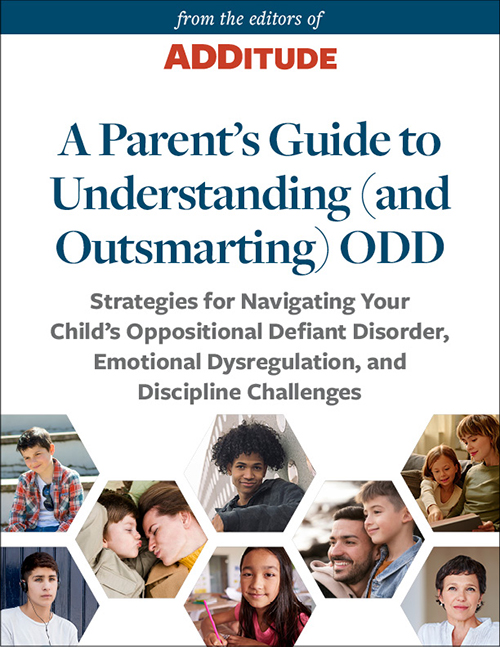


A Parent’s Guide to Understanding (and Outsmarting) ODD
Original price was: $9.95.$7.95Current price is: $7.95.
-
Product Description
Oppositional defiant disorder (ODD) is a hugely impactful, frustrating, and overlooked comorbidity of ADHD. A child with ODD is not merely argumentative and difficult; they are deliberately antagonistic. They would rather suffer enormous consequences than abide by the demands of any authority figure, including their parents.
The strain of dealing with an oppositional child affects the entire family.
A Parent’s Guide to Understanding (and Outsmarting) ODD: Strategies for Navigating Your Child’s Oppositional Defiant Disorder, Emotional Dysregulation, and Discipline Challenges aims to help families steer oppositional children toward positive behaviors, better relationships, and a more peaceful home life.
This go-to guide explains what we know about ODD, how to distinguish ODD from other disruptive behavior disorders and comorbid disruptive behavior disorders in children, what interventions work to reduce defiant and hostile behaviors, and how to evaluate behavioral parent training programs. This eBook covers:
- How to distinguish between ODD signs and symptoms in a child and conduct disorder, disruptive mood dysregulation disorder, intermittent explosive disorder, and pathological demand avoidance
- Similarities and differences between ADHD and ODD presentations
- How a Functional Behavior Assessment (FBA) and a Behavior Intervention Plan (BIP) address disruptive behaviors at school
- Strategies for managing your child’s toughest behavioral problems
- The differences between discipline and punishment—and why it matters
- What makes a good behavioral therapy plan
- How to de-escalate explosive reactions and prevent meltdowns
- Healthy ways to calm an emotionally dysregulated child
- How Does Behavioral Therapy Help Children with ODD
- Signs and Symptoms of related conditions, such as conduct disorder, Disruptive Mood Dysregulation Disorder (DMDD), Intermittent explosive disorder (IED), and pathological demand avoidance (PDA)
- And much more!
Additional resources, scientific evidence, and advice from ADHD experts, professionals, and ADDitude editors round out this eBook dedicated to understanding and addressing oppositional behaviors in children with ADHD.
PLEASE NOTE: This eBook is a downloadable PDF; it does not ship.
-
Full Product Description
Oppositional defiant disorder (ODD) is a hugely impactful, frustrating, and overlooked comorbidity of ADHD. A child with ODD is not merely argumentative and difficult; they are deliberately antagonistic. They would rather suffer enormous consequences than abide by the demands of any authority figure, especially a parent.
The strain of dealing with an oppositional child affects the entire family. A Parent’s Guide to Understanding (and Outsmarting) ODD aims to help.
Inside its 270+ pages, caregivers will learn how to distinguish ODD from other disruptive behavior disorders, evaluate behavioral parent training programs, and implement effective strategies to reduce defiant and hostile behaviors in their children.
10-PART GUIDE TO DISMANTLING OPPOSITIONAL BEHAVIORS IN CHILDREN WITH ADHD
A Parent’s Guide to Understanding (and Outsmarting) ODD: Strategies for Navigating Your Child’s Oppositional Defiant Disorder, Emotional Dysregulation, and Discipline Challenges contains expert advice and resources spanning the following topics:
CHAPTER 1: WHAT IS OPPOSITIONAL DEFIANT DISORDER?
- The ODD diagnosis does not describe a specific neurological condition but a behavior pattern that persists over time.
- The exact cause of ODD is unknown, though many professionals cite a combination of psychological, social, and biological factors.
- Boys with ODD tend to be more physically aggressive and experience explosive anger, while girls are more likely to lie, refuse to cooperate, and express symptoms indirectly.
CHAPTER 2: THE EMOTIONAL DYSREGULATION UNDERLYING YOUR CHILD’S BEHAVIOR
- Anger issues stemming from emotional dysregulation—while notably missing from diagnostic criteria for ADHD—are a fundamental part of the ADHD experience for most people.
- About 80 percent of children with ADHD report problems with emotional dysregulation.
- ADHD symptoms fluctuate over time, which may mean that emotional dysregulation also changes in severity or degree of impairment.
CHAPTER 3: HOW TO USE POSITIVE PARENTING STRATEGIES
- The language you use to describe your child’s behavior matters because it frames your mindset about your child.
- Validating your child’s feelings helps them feel understood, builds connection, and takes the edge off tense situations.
- Building your child’s social-emotional awareness helps them accurately label their feelings and the emotions they observe in others.
CHAPTER 4: BETTER WAYS TO ADDRESS BEHAVIOR CHALLENGES
- Discipline is preferred over punishment because it teaches the child how to behave, while punishment uses fear and shame to force the child to behave.
- By rewarding positive behavior (rather than punishing negative behavior), you help your child feel successful—and further increase their motivation to do the right thing.
- Teaming up with your child to problem-solve various negative behaviors creates a climate where your child feels loved and supported.
CHAPTER 5: STRATEGIES TO HELP AN EMOTIONALLY DYSREGULATED CHILD
- Even if your dysregulated child builds walls to keep you out, you can help turn things around by recognizing how stress uniquely affects them, de-escalating their worries and intense emotions, and connecting with them in productive, healthy ways.
- Interacting in a calm, firm, non-controlling way may help you bypass emotional reactivity. li>
- Your child isn’t seeking to upset or disrespect you deliberately. Remember that emotional dysregulation is real.
CHAPTER 6: HOW TO DISARM YOUR CHILD’S EXPLOSIVE EMOTIONS
- All children want to do well, and they will if possible. If they aren’t doing well, then something must be getting in the way.
- Strategies to defuse explosive reactions work best when there’s a culture of respect and communication at home.
- Even with all the coping tools in the world, it’s unrealistic to expect that your child will never have another outburst. However, it is realistic to hope for their responses to improve and for explosive reactions to become less frequent, less disruptive, and easier to manage.
CHAPTER 7: WHAT YOU NEED TO KNOW ABOUT BEHAVIORAL PARENT TRAINING (BPT)
- While medication works on a neurological level to regulate the brain, behavioral therapy addresses specific problem behaviors by structuring time at home, establishing predictability and routines, and increasing positive attention.
- Though it’s never too late for a child to benefit from behavior therapy, evidence suggests that it works best when started early in the child’s life.
- BPT’s efficacy hinges on the severity of the child’s symptoms, your commitment to the training, and the consistency with which the rules and skills learned are implemented at home and in school.
CHAPTER 8: CONDUCT DISORDER, DMDD, AND MORE CONDITIONS RELATED TO ODD
- ODD behaviors that become frequent and severe may indicate an emerging disruptive behavior disorder like conduct disorder (CD), disruptive mood dysregulation disorder (DMDD), or intermittent explosive disorder (IED).
- Roughly half of all children with ADHD will also develop ODD or CD. The prevalence of co-occurring CD increases with age, and the disorder may affect as many as 50 percent of teens with ADHD. Likewise, about 60 percent of teens with CD also have co-occurring ADHD.
- Pathological demand avoidance (PDA) is not a standalone diagnosis in the U.S., but it falls under the umbrella of the autism spectrum diagnoses and is seen most often in people with autism, ADHD, and high anxiety.
CHAPTER 9: WHEN BEHAVIOR PROBLEMS SHOW UP AT SCHOOL
- Implementing effective behavior management strategies—clear expectations, positive incentives, and predictable consequences—can help defiant students learn how to self-regulate and curb disruptive behaviors.
- When school administrators can’t figure out the trigger for inappropriate behavior, a Functional Behavior Assessment (FBA) and a Behavior Intervention Plan (BIP) can clearly define problem behaviors in the classroom and provide strategies for fixing them.
- When teachers deny recess for poor classroom behavior, they hurt not only their students with ADHD but the whole classroom.
CHAPTER 10: PARENTING Q&As + ADDITIONAL RESOURCES
- Parents often find that modeling positive behaviors can help their child rediscover the polite person they once were or were with others.
- It will take time to change a toxic dynamic that has long been reinforced. Be prepared to see an uptick in defiant behaviors from your child as you work toward change.
- Providing positive feedback for the effort children are making to build trust is an effective motivator for good behavior.
Parent’s Guide to Understanding (and Outsmarting) ODD: Strategies for Navigating Your Child’s Oppositional Defiant Disorder, Emotional Dysregulation, and Discipline Challenges
ORDER THE SPECIAL REPORT NOW!
The full report includes 272 pages of expert advice and information on behavioral parent training programs, strategies to reduce oppositional behaviors in children, signs and symptoms of comorbid disruptive behavior disorders, ODD’s link to ADHD, plus more from ADDitude!
PLEASE NOTE: This eBook is a downloadable PDF; it does not ship.
-
Product Reviews


