The Soaring Cost of ADHD Care
Ongoing ADHD care is causing a financial strain, according to ADDitude readers, who report paying unsustainable out-of-pocket costs and employing extreme measures just to stay afloat.

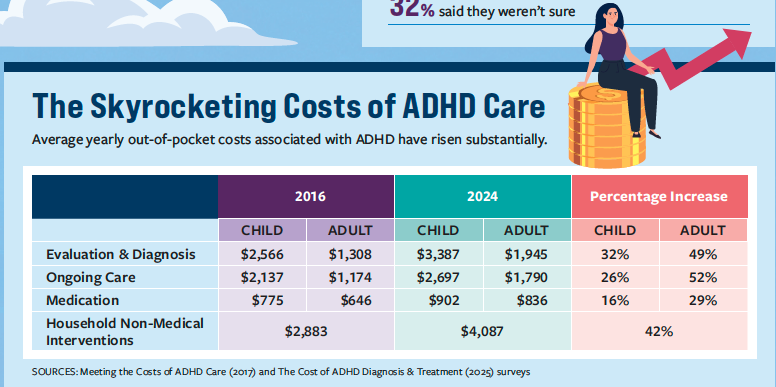
 The average ADDitude family spends more on one child’s ADHD care than most U.S. households spend on groceries each year. For adults with ADHD, annual treatment costs exceed what many people pay for all their utilities combined.
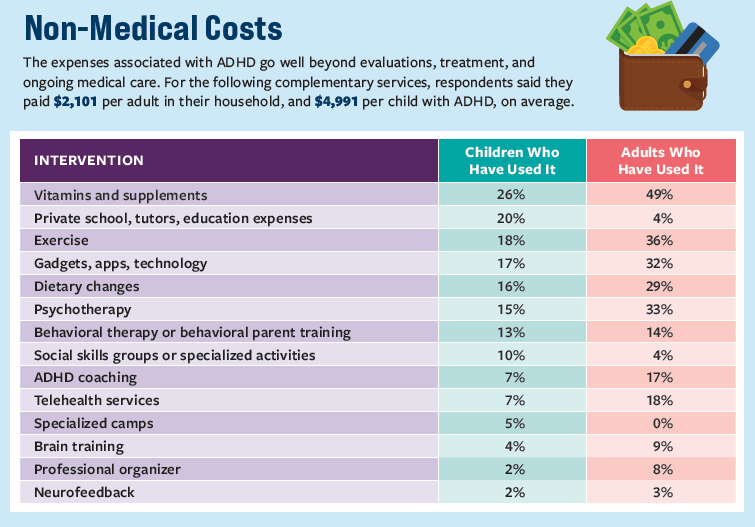
The steep out-of-pocket costs of ADHD care today — on average, more than $8,500 per child and $4,700 per adult annually — are driving families to ration medication, delay or skip medical appointments, and forgo interventions they rely on to function well, according to ADDitude magazine’s new Cost of ADHD Diagnosis & Treatment survey.
Of the 1,970 survey respondents, about 25% cited out-of-pocket medical costs as a limiting or determining factor in accessing ADHD care; 21% said ongoing care is not covered by their insurance, and 16% said their ADHD medication costs are not covered at all.
“I just go without medication when I run short of money,” said one mother. “My adult child has skipped doses to be able to pay for her psychiatrist, and this has brought a lot of unsavory people into her life.”
“I never take my clinician-recommended dosage because I can’t afford it,” said another. “We are paying out-of-pocket for medication, so our kids don’t take it on weekends or vacations,” another mother commented.
[Free Report on Out-of-Pocket ADHD Costs]
ADDitude asked survey participants how they are covering or reducing the cost of ADHD care. Here’s what a few people said:
“I’ve had to take disbursements from retirement accounts to pay for psychotherapy.”
“I have two jobs at this point.”
“I switched jobs to one that is closer to home. I now bike to work. I also joined a nearby affordable community center pool. I swim and arrive at work already having exercised and feeling refreshed.”
“I’ve split the cost of ADHD coaching with another client.”
“It’s hard to pay premiums and pay for doctor visits and maintain a household.”
[ADDitude Directory: Find Affordable Care Near You]
Uneven Insurance Coverage
About half of the people surveyed said their health insurance plan partially paid for an ADHD evaluation for themselves, another adult in the household, or their child(ren). More than one in four said their insurer paid nothing toward evaluation and diagnosis; one in five said those costs were covered completely.
Many of the survey participants expressed frustration about rising health care costs — 10% said their ADHD care costs exceeded 10% of their income — and voiced deep anxiety about potentially steeper hikes and even less coverage in 2026.
The High Cost of Prescription Meds
One-quarter of survey respondents said they reluctantly switched medications because insurers dictated cheaper alternatives or covered prescriptions only partially or not at all, or because the cost of their preferred drug increased substantially.
A significant number said they had to meet their deductible, which was typically more than $1,000, before insurance would cover medication costs.
When asked if their health insurance plan covered the medications they take for ADHD:
- 19% said their prescriptions were fully covered
- 65% said their prescriptions were partially covered
- 16% said their insurer did not cover their prescriptions
Medications Covered
Regarding the medications covered:
- 32% said their insurance covered generics only
- 1% said their insurance covered brand names only
- 35% said generics and brand names were covered
- 32% said they weren’t sure
Types of Providers
Pediatricians and developmental pediatricians were the most common medical professionals seen for ongoing ADHD care (63% for children). Other providers include:
- 62% psychiatrist
- 50% other therapist or counselor
- 50% primary care provider
- 31% psychologist
- 9% occupational therapist
- 6% neurologist
Many survey respondents lamented about the shortage of psychiatrists and the impact of presumably less experienced providers who dismissed their symptoms of adult ADHD.
“I worked with an online provider to get my diagnosis because it was cheaper and quicker.”
“I had to see several different practitioners because they believed I couldn’t have ADHD as an adult since I was never diagnosed as a child.”
Finding Providers Who Take Insurance
The odds of finding a psychiatrist or therapist who accepts your insurance plan are becoming slimmer by the day.
One in four ADDitude survey respondents said that at least one of their medical providers has stopped accepting their health insurance. They voiced worry over a shrinking pool of affordable psychiatrists and therapists.
This provider shortfall was also documented in an investigation by ProPublica, which found that hundreds of mental health providers nationwide have stopped accepting insurance plans in recent years. They blamed insurance network practices that forced providers to chase down payments that were meager or late, and some reported that their services were denied coverage altogether.
The providers also criticized insurers for increasingly interfering with patients’ treatment, sometimes denying it, or pushing generic prescription medications that were cheaper but not optimal.
As the availability of mental health providers who take insurance continues to worsen, ADDitude survey participants shared their experiences.
“This has happened throughout my child’s life. His occupational therapist left the insurance network, his psychiatrist left, my therapist left, our family primary care provider left.”
“It took almost two years to find and start seeing a new therapist. The wait list was nine months long.”
“My psychiatrist is semi-retired and takes cash only. I have not found a new one who will follow my treatment plan, which was working great.”
“I had to call around and ask a bunch of psychiatrists, and it was such a pain. They think that you’re seeking medication when you just want appropriate care. It took me six months to find someone new.”
“I was referred to a nurse practitioner from a psychologist about nine months ago because the practice said my insurance didn’t reimburse them enough. I chose to stay with the practice, rather than start somewhere new, and now I pay out-of-pocket.”
ADHD Medication Cost: Next Steps
- Free Download: What to Ask Before Starting ADHD Medication
- Read: These Prescription Assistance Programs May Help You Save Money on ADHD Medication
- Read: How Does Health Insurance Work? A Primer for Patients with ADHD
- Watch: “Cracking the ADHD Medication Maze: How to Get, Afford, and Refill Your Prescriptions With Minimum Hassle”
SUPPORT ADDITUDE
Thank you for reading ADDitude. To support our mission of providing ADHD education and support, please consider subscribing. Your readership and support help make our content and outreach possible. Thank you.